
What is Ayurveda
The science of life, for the life you live
Ayurveda sees health as balance between your body, your mind, and the rhythms of the day and seasons. Start with the basics, see where it fits into your day, then go deeper with the guides.
Pancha mahabhuta · the five elements
Five elements make everything
Choose an element to explore its place in the traditional framework.

Space
Akasha · open & lightExplore
The quiet, open feeling of room to breathe. It's the spaciousness you feel on a clear morning, when the mind is calm and there's space for new ideas.

Air
Vayu · light & movingExplore
Everything in motion: your breath, your energy, the flutter of your thoughts. When it flows well, you feel light, quick, and alive.

Fire
Agni · warm & brightExplore
The spark that turns food into energy and effort into results. When it's steady, you feel warm, focused, and clear-headed.

Water
Jala · cool & flowingExplore
Softness and flow, the part of you that feels smooth, calm, and at ease. It's the gentle, fluid quality that keeps everything moving kindly.

Earth
Prithvi · grounded & steadyExplore
The solid, settled feeling of being grounded. It's your sense of strength and stability, the part of you that stays calm and holds firm.
Three doshas
How the elements show up in you
Most people are a blend, with one or two doshas leading. None is better than another. Each has its strengths, and each has its own way of drifting out of balance.
Vata
Space & Air · the free spirit
If you're often the one with the new idea, quick to get excited and quick to move on? That's Vata. People with this nature tend to be light, creative, and full of energy. They think fast, talk fast, and love starting fresh things.
In balance
- Light, slim frame and naturally dry skin
- Imaginative, curious, and full of ideas
- Energy comes in bursts rather than a steady stream
- Joyful and playful when life feels settled
- Feels best in warm, calm, grounded surroundings
Out of balance
- Restless mind and trouble winding down
- Dry skin and a body that feels cold
- Sleep that comes and goes
- Worry, overwhelm, or feeling scattered
- Bloating and an unsettled stomach
Steadied by
- Keep a gentle rhythm: regular meals and bedtime
- Warm, comforting food: soups, stews, anything cosy
- Slow down in the evening, away from screens
- A warm oil massage to feel grounded again
- Wrap up warm, especially when it's cold and windy
Pitta
Fire & Water · the achiever
If you're focused, driven, and like things done properly? That's Pitta. People with this nature are sharp, warm, and natural leaders. They have strong appetites, strong opinions, and the fire to make things happen.
In balance
- Medium, athletic build with warm skin
- Sharp mind, quick to learn and decide
- Steady, strong energy and a healthy appetite
- Confident, organised, and driven
- Feels best when cool, calm, and not rushed
Out of balance
- Irritability, impatience, or a short fuse
- Heat: flushing, heartburn, or skin flare-ups
- Waking in the small hours with a busy mind
- Being overly critical of yourself and others
- Pushing so hard you burn out
Steadied by
- Don't skip meals. Steady fuel keeps the fire kind
- Cooling foods: sweet fruit, greens, plenty of water
- Step away from work before you're running on empty
- Time in nature, moonlight, and open air
- Let some things be good enough
Kapha
Earth & Water · the nurturer
If you're calm, steady, and the person others lean on? That's Kapha. People with this nature are warm, patient, and loyal, with real staying power. They love comfort, routine, and looking after the people around them.
In balance
- Solid, strong build with smooth, soft skin
- Calm, steady temperament, slow to anger
- Deep, lasting energy once you get going
- Loyal, caring, and grounded
- Feels best with warmth, movement, and variety
Out of balance
- Sluggishness and a hard time getting started
- A heavy feeling in body and mind
- Sleeping long but still waking groggy
- Holding on to things, habits, or feelings
- Low motivation or a flat, foggy mood
Steadied by
- Rise early and get moving to shake off heaviness
- Light, warm, spiced food over rich and heavy
- Seek out novelty: new routes, people, ideas
- Stay warm and dry when the weather turns damp
- Regular, energising exercise you enjoy



Your nature.
Your state today.
The pattern you start with and how you feel right now are related, but they aren’t the same. Ayurveda considers both when thinking about everyday care.
Prakriti: your natural make-up
The unique blend you were born with, the reason you handle heat, stress, and sleep differently from your friends. It doesn't change. Knowing it is like finally getting the instruction manual for yourself.
Vikriti: where you are today
Your natural make-up is the baseline, but life nudges you off it. A hectic month, a change of season, too little sleep. This is simply noticing where you are right now, so you can find your way back.
Ideas that describe how you feel
These traditional ideas connect constitution and current state with food, rest and everyday rhythms. They offer a framework for reflection, not medical measurements.
Your inner fire
Agni
Take a closer lookThink of it as the spark that turns what you eat into energy. When it's burning well, food sits easy, your energy stays steady, and your mind feels clear. When it dims, everything feels a little heavier.

The morning fog
Ama
Take a closer lookThat heavy, foggy feeling some mornings, like you slept but didn't quite recharge. Ayurveda sees it as leftover residue from food or feelings that weren't fully processed. The good news: it clears.

That healthy glow
Ojas
Take a closer lookThe deep-down wellness you feel after a stretch of good sleep, good food, and ease: calm, resilient, quietly glowing. Ayurveda sees it as your reserve of vitality, built slowly through kind habits.
Ayurveda in your day
From waking up to winding down
Ayurveda is less a set of remedies than a way of arranging an ordinary day. Here are some examples of how it shows up.
Dinacharya: the daily routine
Ayurveda pays most attention to how a day begins: waking at a steady time, a glass of warm water, a few minutes of stretching or slow breathing before the phone.
Because a body that knows what comes next tends to settle.
Agni: your digestive fire
Make the main meal the one around midday, favour warm, freshly cooked food, and notice how a meal sits afterwards: light and steady, or heavy and slow.
Because Ayurveda reads digestion as the centre of how you feel day to day.
Vyayama: exercise
Match movement to how you feel: slower, grounding practice when you're scattered, unhurried and cooling when you run hot, brisk and varied when you feel heavy. Stop at about half your effort, not at exhaustion.
Because the aim is energy you keep, not energy you spend.
Nidra: sleep
Ayurveda counts sleep as one of the three pillars of wellbeing, beside food and a balanced use of energy. A wind-down that starts before bed (softer light, a warm drink, fewer screens) is the habit it suggests.
Because sleep comes more easily to a mind that has already slowed down.
Ritucharya: the seasonal routine
As the weather turns, Ayurveda adjusts food, routine and movement with it: lighter and warming in cold, damp months, cooling in the heat, extra steadiness when it's dry and windy.
Because the same habits feel different in a monsoon than in May.
Manas: the mind
Slow breathing (pranayama), a few quiet minutes, and time outdoors are everyday Ayurvedic tools for a busy mind: small pauses rather than a fix.
Because calm is easier to find when you've practised the way back to it.
What it can add to your day
Small habits, felt in the everyday
Ayurveda’s promise is modest and practical: notice how you feel, adjust a little, and keep at it. These are the four places people tend to look first.
Energy
Regular meals and a steady bedtime even out the swings of the day.
What Ayurveda watches: rhythm.
Digestion
Warm food, a main meal at midday and room between meals keep agni steady.
What Ayurveda watches: how food sits.
Sleep
An evening that slows down, so rest has somewhere to start.
What Ayurveda watches: the wind-down.
Calm
Breath, quiet and time outside, practised a little and often.
What Ayurveda watches: the pause.
Ayurveda works alongside your doctor, never instead of one. Anything persistent deserves a clinician.
Find your blend
Which doshas lead in you?
A free two-minute quiz gives you a starting point. Then the day above, and every guide below, reads for your own balance rather than a generic average.
Take the free dosha quizThe guides
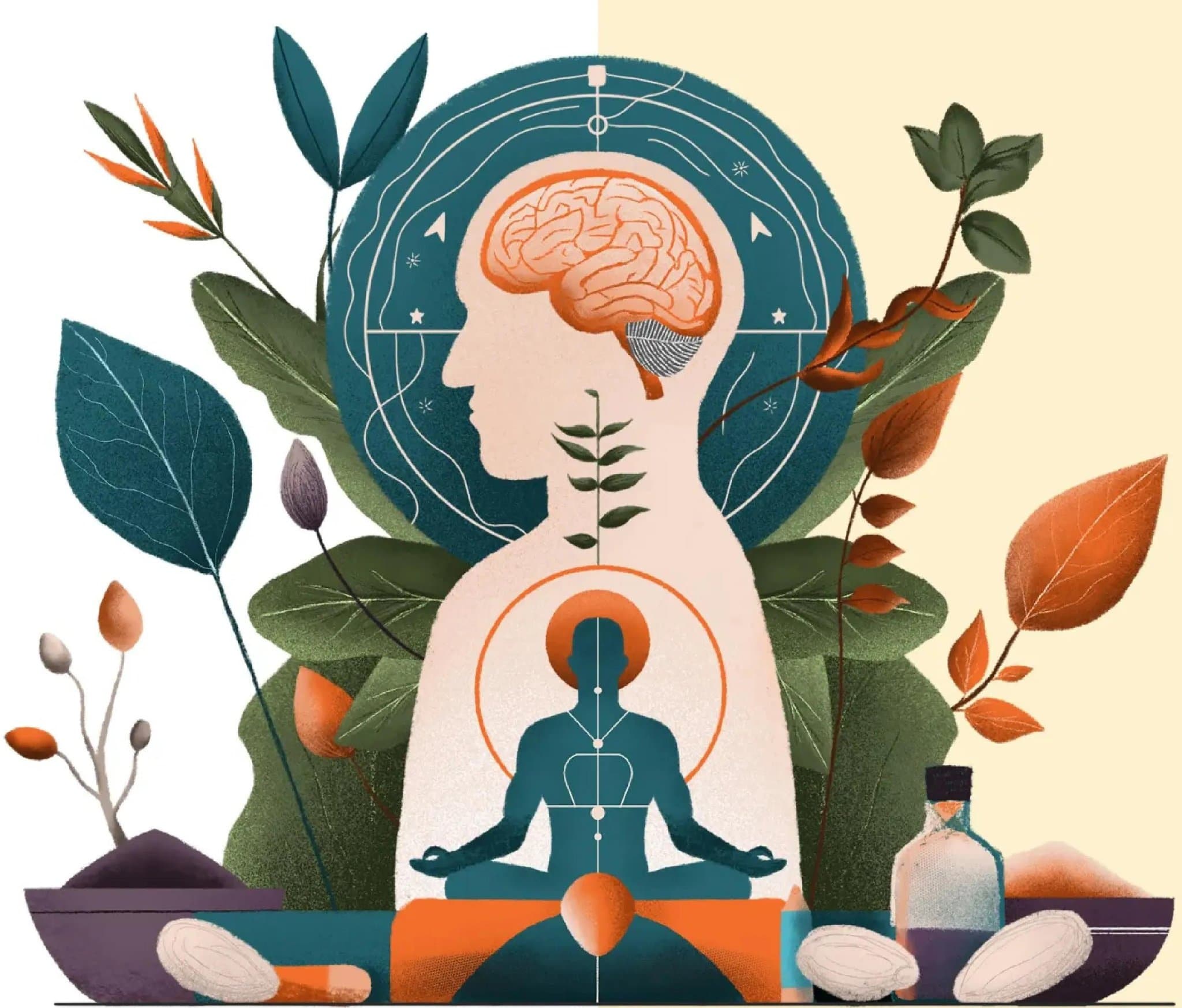
Ayurveda Basics
MANAS
Manas( Mind) is an essential coordinating faculty in Ayurveda
Ayurveda Basics
Happy Muscles, the Ayurvedic Way
A simple, playful Ayurvedic guide to nourishment, movement & everyday recovery — for muscles that feel good more often.

Daily Routine (Dinacharya)
Tense, Release, Ahhh! Your 5-Minute Reset
Shoulders up to your ears? Jaw clenched? Mind running through tomorrow’s to-do list at midnight? Try a simple way to pause and unwind.

Ghee: Is It Really Good for You?
An Ayurvedic look at traditional ghee, digestion and cooking
Conversations in the Circle
See the questions people bring to everyday Ayurveda, and the conversations that follow.

Sleep & Stress
Why do I keep waking up at 2-3 am?
Why do I sometimes wake up at 2–3 AM and feel completely awake? Is there an Ayurvedic explanation? What can I do to try and get undisturbed sleep?
Skin & Hair
Hair Oiling in Ayurveda: Is There a Right Way?
What is the Ayurvedic approach to oiling the hair and scalp? I’ve heard that traditional Ayurvedic hair oiling sometimes begins with massaging specific points on the forehead, temples and scalp before applying oil. What is the Ayurvedic reasoning behind this practice, and is there any scientific evidence supporting the benefits of massaging these areas? Does the oiling technique or frequency differ based on hair/scalp type, such as dry, oily, fine, thick, curly or high-porosity hair? And how should someone choose between oils such as coconut, sesame, bhringraj, amla or other Ayurvedic oils?
Herbs & Remedies
Just Fennel or Cumin Coriander Fennel (CCF) Water, can a vata-pitta person have that drink daily at night?
Should the person have that drink daily or reset it after sometime.
General Wellness
Daily routine - changing seasons
Should healthy individuals modify their daily routine with the changing seasons?
Ayurveda for your day, in your pocket
The Kaya5 app turns your blend into a daily routine (every step with its “because”) and a short check-in keeps it in step with how you feel. More about the app
 Coming soon on the App Store