Simple Yogic Breathing Practices for Everyday Life
You’ve started paying attention to your breath. So what comes next?
Some days you want to settle. Other days you need energy, focus, cooling, or release. Intentional breathing helps you choose what supports you in the moment.
Yoga has explored breath, body, and mind for centuries through pranayama. The names can sound complex, but the idea is simple:
How do I feel right now, and what would support me?
The answer may change from day to day — or moment to moment.
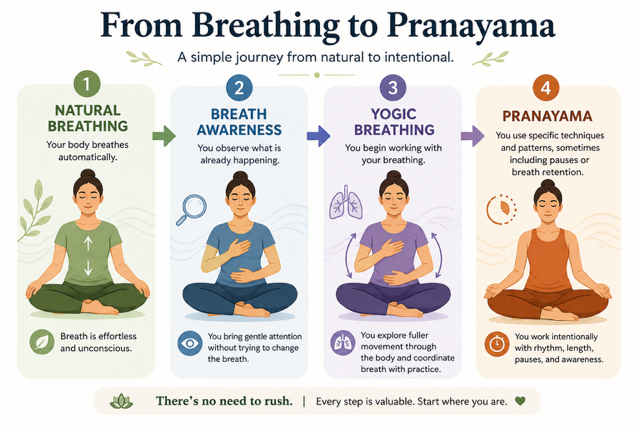
From Breathing to Pranayama
Breathing happens naturally. Pranayama begins when you work with it intentionally.
🌬 Natural Breathing — automatic
👀 Awareness — observe without changing
🌿 Yogic Breathing — gentle shaping of breath
🧘 Pranayama — specific techniques and patterns
There’s no rush. Simple practices offer plenty.
Where Pranayama Fits
A simple way to understand yoga’s progression:
Asana → Pranayama → Meditation
Movement prepares the body.
Breath steadies the mind.
Meditation deepens awareness.
You don’t need all three every session. Choose what fits the moment.
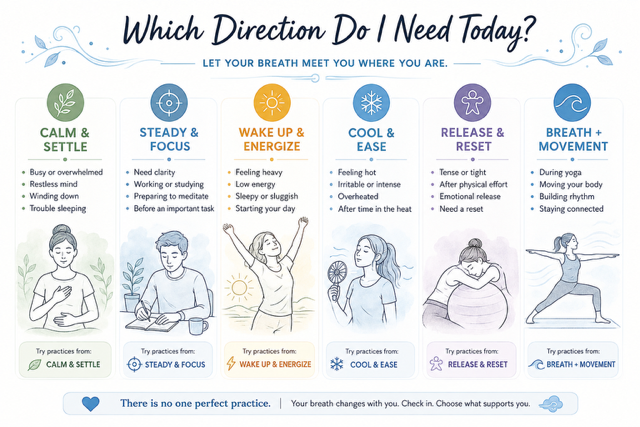
Find the Breath That Fits the Moment
Breathing techniques can feel overwhelming at first, but you don’t need to memorize names.
Start with purpose: Are you looking to settle, focus, wake up, cool down, release tension, or coordinate breath with movement?
Use this table as a simple starting point.
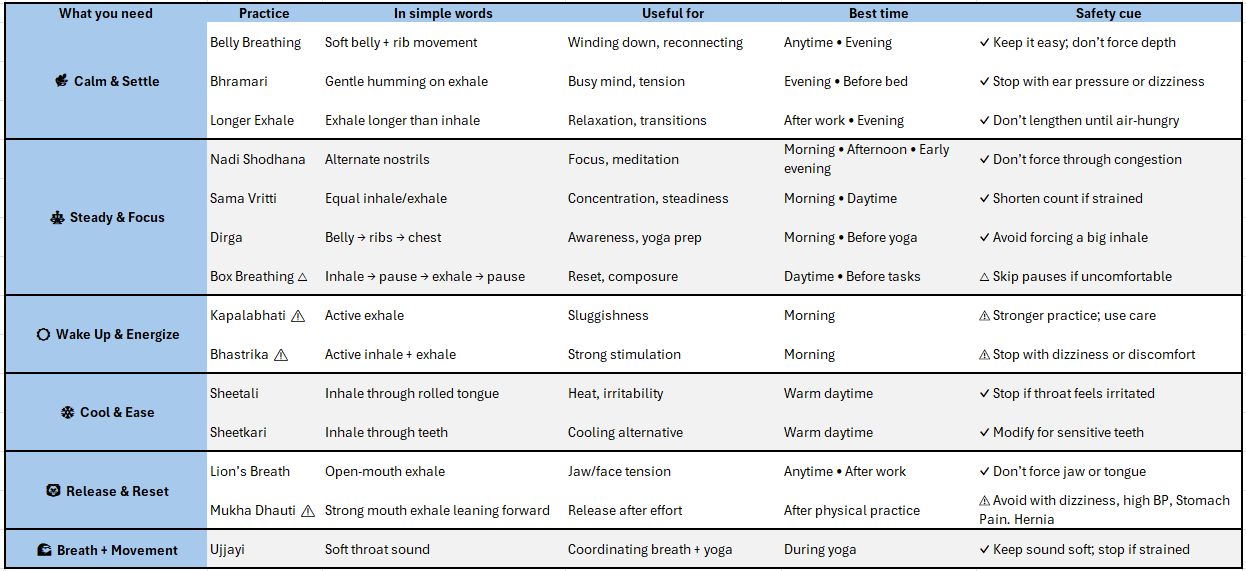
Safety Key:
✓ Gentle • △ Modify • ⚠ Guidance recommended
Box Breathing is modern, not classical pranayama, but included because it’s widely used and helpful.
These categories are guides, not rigid boxes — the same technique may feel different depending on how you practice and how you feel that day.
Through The Ayurvedic Lens
Choose based on how you feel now — not your dosha.
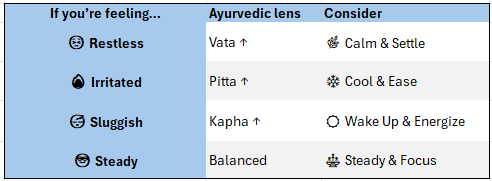
This is a guide, not a rule.
Time of Day
Time can influence how a practice feels, but it doesn’t dictate what you must choose.
Morning often supports steadiness or stimulation.
Daytime may call for focus or cooling.
After work may need settling or releasing tension.
Before bed favors quieter techniques.
But your current state matters more than the clock.
⚠️ When Less Is Better
Use extra care with:
Kapalabhati
Bhastrika
Forceful cleansing breaths
Prolonged breath retention
Avoid forcing breath through congestion, pushing past pain, or continuing through dizziness, nausea, or anxiety. More effort doesn’t mean more benefit.
Your Breath Doesn’t Have to Be Perfect
It’s easy to overthink your breathing. But the goal isn’t the longest inhale or most impressive breath hold. Choose what feels appropriate. Learn gradually. Notice how your body responds.
Some days, the best practice is the simplest:
Breathe naturally.
🌸Continue Your Journey: You’ve learned how breath can support different needs. You don’t have to remember every Sanskrit name.
Start with one question: What would support me right now?
Then begin there.
🌸Next Pathway : Eating Well with Yoga & Ayurveda. A simple approach to food, digestion, and everyday nourishment.