

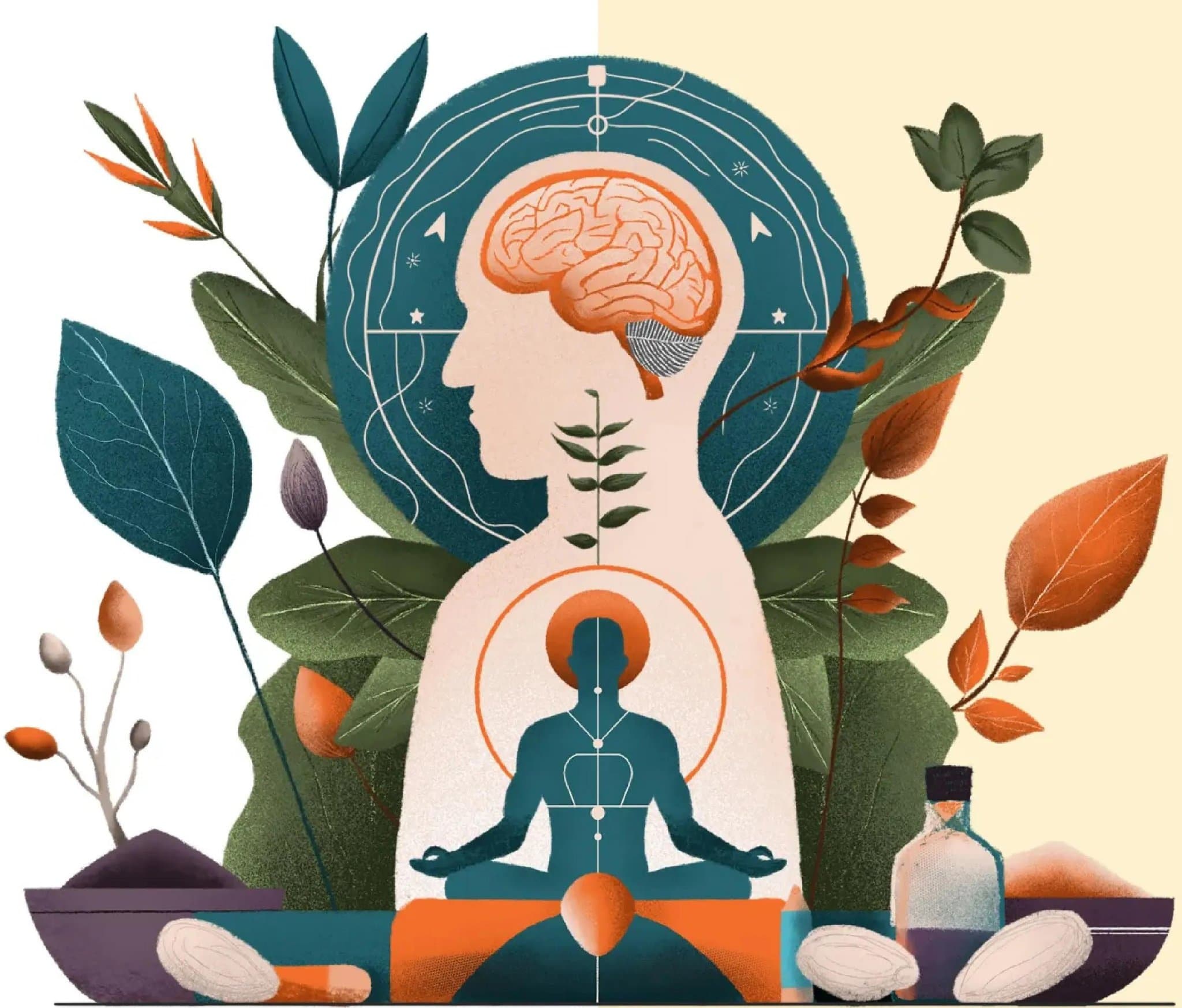
In Ayurveda, health is not merely the absence of physical disease. It is a state in which Śarīra (body), Indriya (senses), Manas (mind) and Ātman (self) function in harmony.
Among these, Manas occupies a unique position because it connects sensory perception, thought, emotion, intention and behaviour.
The ancient Ayurvedic scholars recognized that the quality of our mental activity influences the way we perceive the world, respond to circumstances and maintain healthy habits. Thus, understanding Manas is essential not only for the study of mental wellbeing but also for understanding the holistic Ayurvedic approach to health.
What is Manas?
The Sanskrit word Manas (मनस्) is derived from the verbal root “man”, associated with thinking, understanding, consideration and reflection.
Ayurveda describes Manas as an Atīndriya faculty—something that cannot be understood merely as one of the five external sensory organs. It participates in the process by which sensory information becomes meaningful to the individual.
मनसश्च लक्षणमनुत्वमेकत्वं च।
Charaka describes,,
The mind is characterized by Aṇutva (subtlety) and Ekatva (singularity). This classical description highlights the subtle and singular nature of Manas.
Manas – The Coordinator of the Senses
Imagine a person sitting in a beautiful garden. The eyes see flowers, the nose perceives fragrance, the ears hear birds, the skin experiences the breeze and the tongue may taste something sweet.
Yet simply having functioning sense organs does not guarantee complete perception.
The mind must attend to the sensory experience.
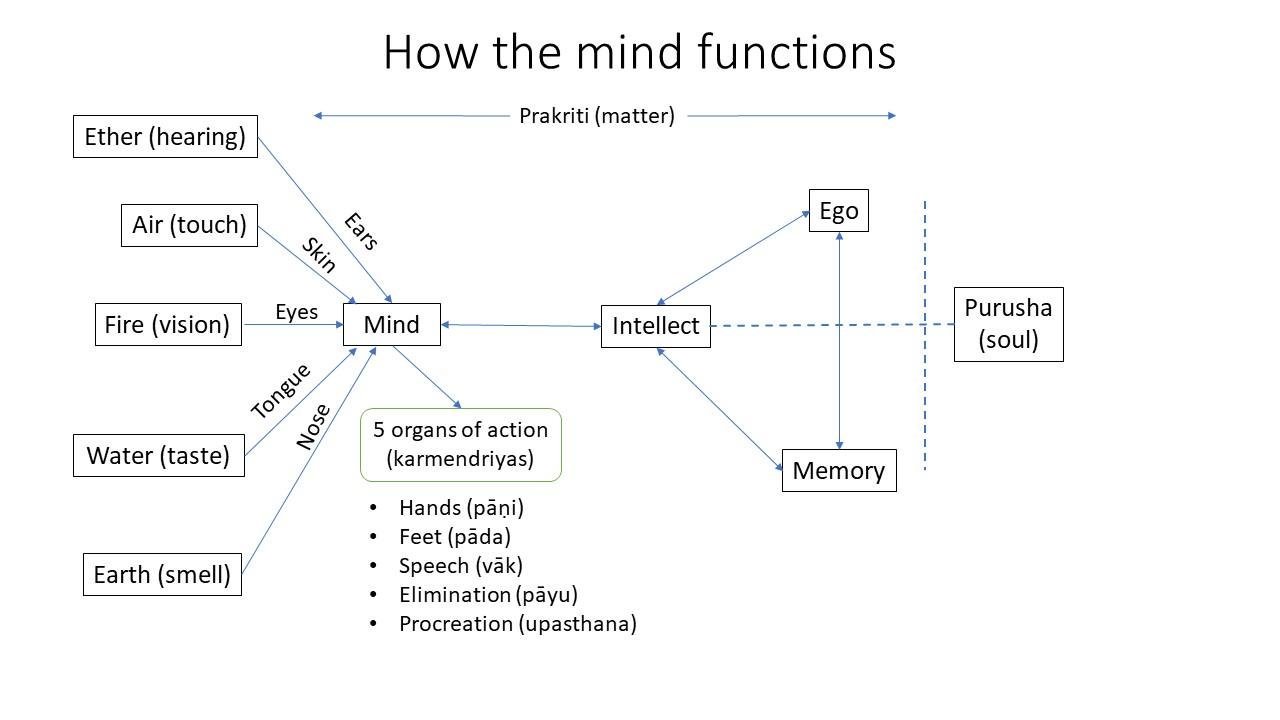
This makes Manas particularly important in Indriyārtha Saṃyoga—the interaction between the senses and their objects.
Functions of Manas
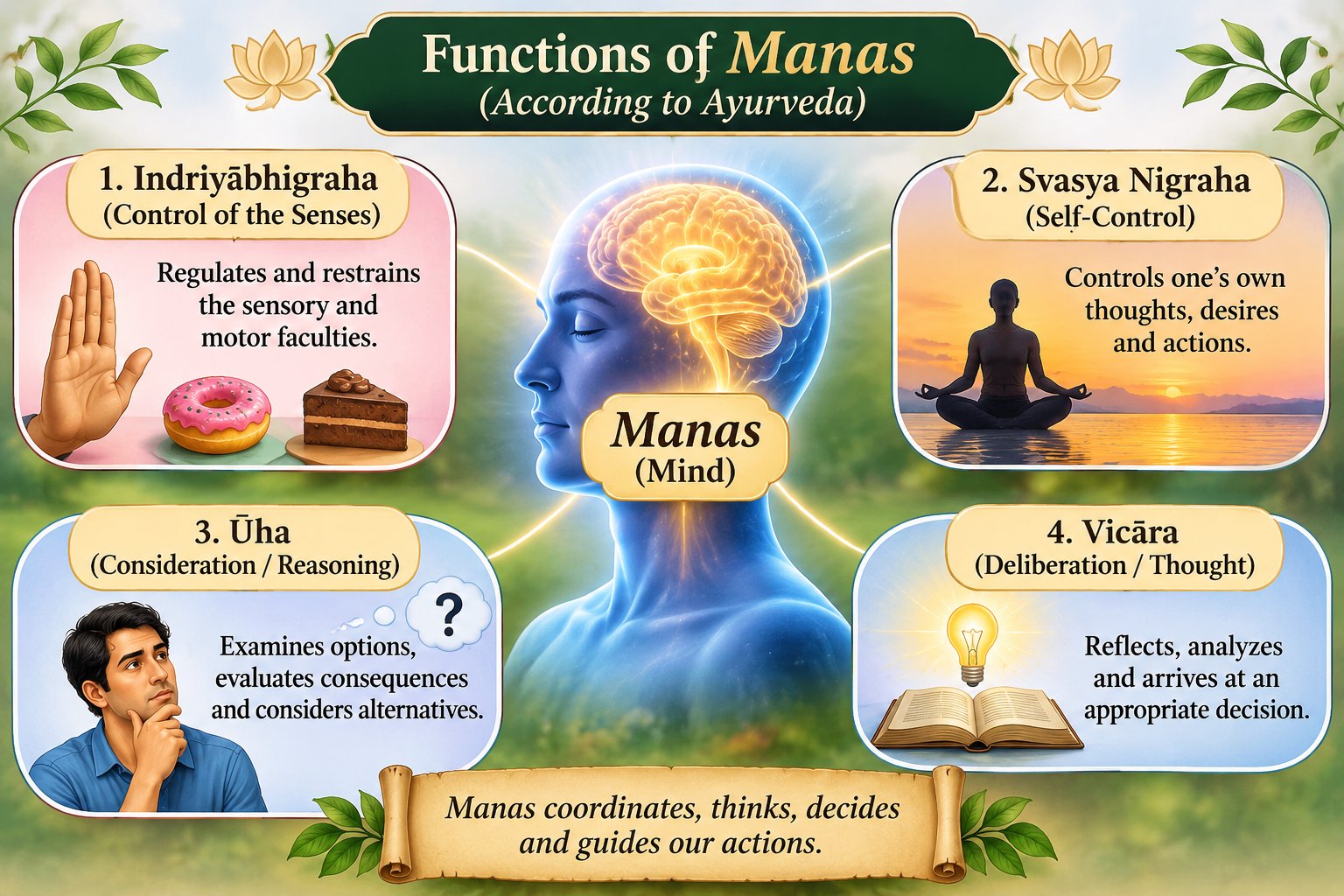
Charaka describes four principal functions of Manas:
1. Indriyābhigraha – Control of the Senses
इन्द्रियाभिग्रहः
Manas coordinates and regulates the sensory and motor faculties.
For example, a person may see an attractive food item but decide not to eat it because it is not appropriate at that moment. The sensory perception occurs, but the response is regulated.
This illustrates the importance of mental control in daily life.
2. Svasya Nigraha – Self-Control
स्वस्य निग्रहः
The ability to restrain oneself is another important function of Manas.
Ayurveda places considerable importance on appropriate regulation of sensory desires and behaviour. This principle is particularly relevant to Sattvavajaya, an Ayurvedic approach involving mastery or restraint of the mind. Caraka Samhita Online
3. Ūha – Consideration and Reasoning
ऊहः
Manas participates in consideration, examination and the formation of possible interpretations.
Before taking an action, the mind may consider:
“What will happen if I do this?”
This capacity allows an individual to examine possibilities before responding.
4. Vicāra – Deliberation and Thought
विचारः
Vicāra represents mental consideration and reflection.
It allows a person to examine experiences, compare possibilities and arrive at a more appropriate response.
Together, these functions demonstrate that Ayurveda does not view the mind simply as a passive receiver of information. Manas participates actively in perception, regulation, thought and behaviour.
The Three Guṇas of Manas

One of the most fascinating concepts in Ayurvedic psychology is the Triguna:
SATTAVA
RAJAS
TAMAS
These three qualities help explain different patterns of mental functioning

Charaka-based explanations describe Sattva as illuminating, while Rajas and Tamas influence mental activity in different ways. Rajas is associated with activity and Tamas with inhibition or obscuration.
1. Sattva – The Quality of Clarity
सत्त्वम्
Sattva is associated with clarity, knowledge, awareness, purity and balance.
2. Rajas – The Quality of Activity
रजस्
Rajas is associated with movement, stimulation, activity, passion and initiation.
3. Tamas – The Quality of Inertia
तमस्
Tamas is associated with heaviness, inertia, darkness, obstruction and reduced activity.
mental wellbeing is therefore not merely about suppressing thoughts or avoiding activity. It is about cultivating clarity, appropriate action, self-control, healthy routines and harmonious living.
In an age of constant stimulation, the ancient Ayurvedic message remains remarkably relevant:
A healthy mind is not a mind without activity—it is a mind capable of choosing how to respond.