A Practical Guide to Movement, Nourishment, Recovery, and Well‑Being as Life Evolves
Life changes.
Responsibilities shift.
Energy fluctuates.
Our bodies evolve.
The routines that supported us in the past may not always be what we need today. Yoga and Ayurveda offer a simple principle:
Your practice can evolve with you.
This doesn’t mean starting over at every stage of life. It means recognizing what matters now - while supporting the strength, mobility, and well‑being you’ll want in the years ahead.
The Life Path
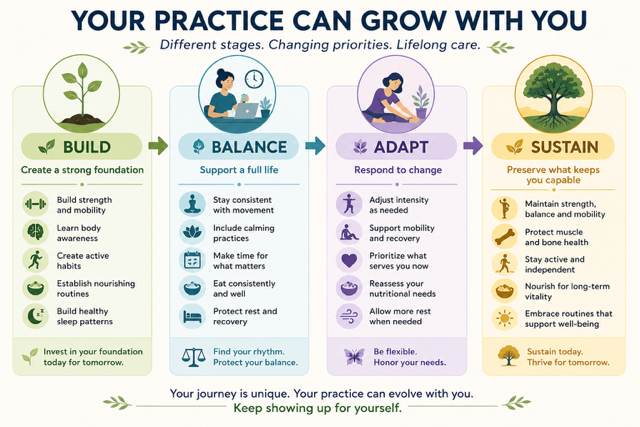
BUILD -> BALANCE -> ADAPT -> SUSTAIN
Different stages. Changing priorities. Lifelong care.
These stages aren’t defined by exact ages. Health, family, work, hormones, responsibilities, and life circumstances shape our needs at different times. You may be building in one area while adapting in another. Think of these stages as directions, not age groups.ps.
Your Life‑Stage Guide
Well‑being doesn’t require a new routine every decade. What changes is the emphasis.
⭐ Life‑Stage Overview Table
Stage | Main Focus | Yoga | Strength | Movement | Nutrition | Recovery | Ayurveda |
|---|---|---|---|---|---|---|---|
BUILD | Establish a strong foundation | explore movement • develop mobility • build awareness | develop strength | establish active habits | build nourishing patterns | recognize rest as progress | establish supportive routines |
BALANCE | Stay consistent through a full life | maintain mobility • include calming practices | continue progressive training | remain active despite busy schedule | eat consistently + adequately | protect sleep + downtime | maintain steady daily rhythm |
ADAPT | Respond to changing needs | modify intensity • support mobility + recovery | prioritize muscle + bone health | choose activity appropriate to capacity | reassess changing needs | allow additional recovery | adjust habits as circumstances shift |
SUSTAIN | Maintain strength + independence | maintain mobility • balance • coordination | preserve strength for everyday life | maintain regular functional movement | prioritize protein + nutrient‑rich foods | balance activity with rest | favor consistency, nourishment, stability |
You don’t need to fit neatly into one column. The more useful question is: What deserves my attention now?
Let Your Yoga Evolve With You
There’s no need to stay with one kind of yoga throughout life. At different times, you may benefit from:
more challenge
more mobility
a quieter practice
additional recovery
The four yoga pathways introduced earlier can help you choose what supports you now.
Yoga Needs by Life Direction
Life Direction | What You May Need From Yoga |
|---|---|
BUILD | movement • strength • mobility • confidence |
BALANCE | a thoughtful mix of active + calming practices |
ADAPT | mobility • recovery • appropriate intensity |
SUSTAIN | strength • balance • mobility • restoration |
Your age doesn’t determine your yoga. Your needs help shape your practice.
Yoga + Strength: Better Together
Yoga and strength training offer different, complementary benefits.
Yoga Supports | Strength Training Supports |
|---|---|
mobility | muscle strength |
balance | bone loading |
flexibility | physical capacity |
coordination | lifting + carrying ability |
body awareness | everyday strength |
relaxation | maintaining muscle over time |
Neither replaces the other. A well‑rounded approach may include yoga, resistance training, walking, cardiovascular activity, recreation, and everyday movement.
Mobility helps you move. Strength helps you manage physical demands. Balance helps you stay steady.
Movement Is More Than Exercise
Movement isn’t only what happens during a workout. Walking, climbing stairs, gardening, carrying groceries, hiking, playing, and everyday household activity all keep you connected to your body. The way you move may change over time, but staying active remains essential throughout adulthood. Learn more in Movement Is Medicine pathway.
When Life Calls for a Different Approach
Work demands, caregiving, sleep disruption, stress, injury, hormonal changes, health conditions, and aging can all influence what feels manageable. Adapting doesn’t always mean doing less - often it means choosing priorities more intentionally.
If You Notice… | Consider… |
|---|---|
recovery takes longer | adjust intensity or allow more recovery |
strength is declining | give resistance training priority |
movement feels restricted | include mobility without forcing range |
balance feels less steady | add safe, progressive balance practice |
life feels overloaded | simplify your routine |
time is limited | choose shorter, consistent practices |
Adapt the routine while preserving the intention to care for yourself.
A Closer Look at the Menopause Journey
For women, midlife may include perimenopause, menopause, and post‑menopause. Hormonal changes during these years can influence sleep, energy, muscle and bone health, body composition, temperature regulation, and mood.
Explore the full guide here:
The Three‑Part Journey: Perimenopause, Menopause, Post‑Menopause Through Yoga, Ayurveda & Strength
This in‑depth pathway explores strength, flexibility, nutrition, emotional well‑being, comfort, lifestyle, and daily routines.
Where Ayurveda Fits In
Ayurveda recognizes a simple truth: Our needs don’t remain the same throughout life. Rather than prescribing one routine forever, Ayurveda encourages attention to everyday foundations.
Foundation | Everyday Application |
|---|---|
Rhythm | supportive patterns around meals, movement, sleep |
Nourishment | foods that match health, appetite, current needs |
Movement | activity that matches energy + capacity |
Recovery | adequate rest + restoration |
Adaptation | update routines when circumstances change |
The purpose isn’t perfect Ayurveda - it’s thoughtful use of its principles as life evolves.
Healthy Aging Is About What You Can Do
Healthy aging isn’t about trying to look or move as you once did. A more meaningful question is: Can I continue doing the things that matter to me?
Everyday Ability | What It Supports |
|---|---|
getting up from the floor | strength , mobility |
carrying groceries | grip , upper‑body strength |
climbing stairs | leg strength , endurance |
walking comfortably | mobility , stamina |
reaching + bending | functional mobility |
maintaining balance | stability • confidence |
traveling | stamina • adaptability |
enjoying hobbies | participation • quality of life |
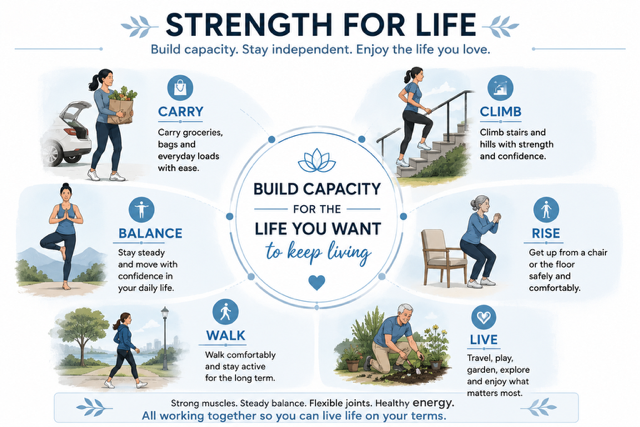
These abilities may seem ordinary, but maintaining them profoundly affects independence and quality of life.
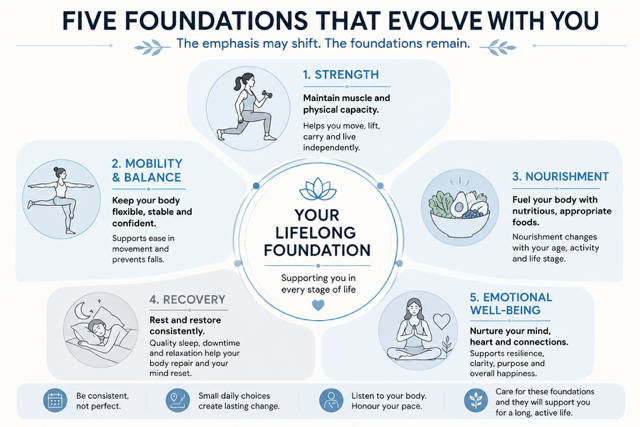
Your Lifelong Foundation
What Are You Building For?
When Wellness Needs Medical Support
Yoga, Ayurveda, nutritious food, exercise, and everyday habits support well‑being - but they do not replace medical care.
Seek professional guidance for significant changes in:
strength
balance
energy
cognition
weight
mood
pain
sleep
physical function
Health conditions, medications, injuries, pregnancy, hormonal transitions, and individual risk factors may also affect which practices are appropriate.
Growing With Your Practice
A lifelong practice isn’t about staying the same. It’s about remaining connected to your health as life evolves.
There will be times for building, periods for balance, moments that call for adaptation, and later years when sustaining your capability becomes especially important.
🌱 BUILD -> 🌿 BALANCE -> 🌸 ADAPT -> 🌳 SUSTAIN
The goal isn’t to return to an earlier version of yourself.
Support who you are today while continuing to build toward the life you want ahead.
🌸 Continue Your Journey: Your life moves through stages. Your needs shift. Your practice can grow with you.
The next step in your journey brings yoga into everyday living - not just on the mat, but woven gently into the choices, rhythms, and moments that shape daily life.
🌸Next Pathway: Living Yoga Every Day
Bring yoga beyond the mat through simple everyday choices and mindful living.