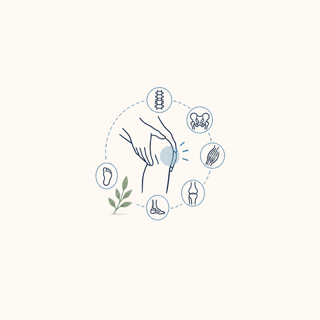
Knee pain is common - walking, stairs, squatting, yoga, everyday life. When it shows up, we zoom in on the knee. But the knee is only one link in a bigger movement chain.
A quick reminder: Yoga builds awareness, mobility, and strength. It does not diagnose or treat knee pain. Seek professional care for swelling, locking, instability, or pain that persists.
Your Knee Doesn’t Work Alone
Lower Back -> Pelvis & Hips -> Thighs -> Knee -> Ankle ->Foot
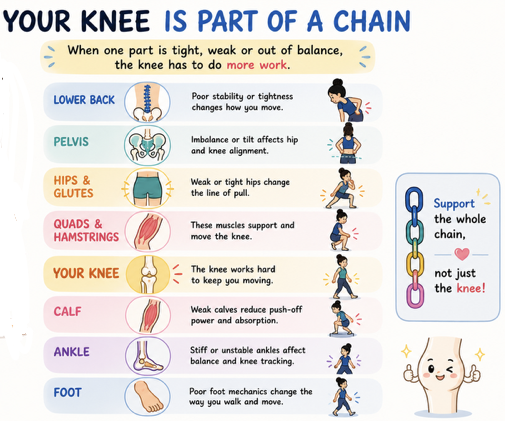
Every link influences the next. If one area stiffens or weakens, another compensates - often the knee.
Look Up. Look Down.
Look up: Hips, glutes, quads, hamstrings, pelvis, lower back - they guide leg position and control.
Look down: Calves, ankles, feet - they absorb load, adapt to movement, and create your foundation.
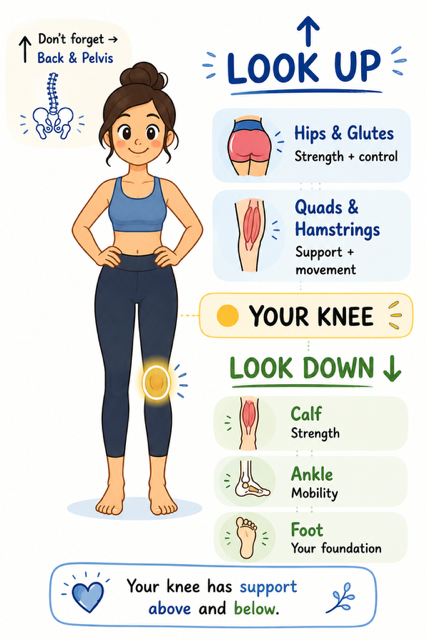
Your knee is the middle manager, not the whole story.
Mobility + Stability: Different Jobs
Lower back -> control
Hips -> mobility + stability
Knee -> controlled motion
Ankle -> mobility + stability
Foot -> adaptable foundation
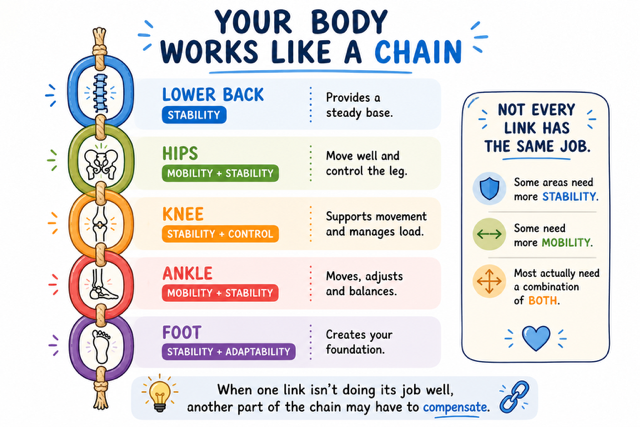
Not every link has the same job. When one link struggles, the knee often speaks up.
Start by Watching How You Move
Notice what happens during ordinary activities.
Pay attention when you:
Walk
Climb stairs
Rise from a chair
Squat to pick something up
Stand on one leg
Get down to and up from the floor
Does one ankle feel stiffer? Do you shift your weight toward one side? Does one leg feel stronger? Do your knees drift inward when you rise from a chair? Is balancing noticeably easier on one side?
You aren't trying to diagnose yourself. You're simply observing. That kind of awareness is one of yoga's most useful skills.
Ayurveda would call this svadhyaya — simply noticing your patterns with kindness instead of judgment.
Quick Self‑Checks: (30 seconds): These build awareness without diagnosing anything.
Foot Angle Check: Notice if your feet point outward when you walk.
Hip Drop Check: Stand on one leg. Does one hip drop more?
Knee Tracking Check: Bend slightly. Do knees drift inward?
These tiny clues show how the chain behaves.
Where Yoga Helps
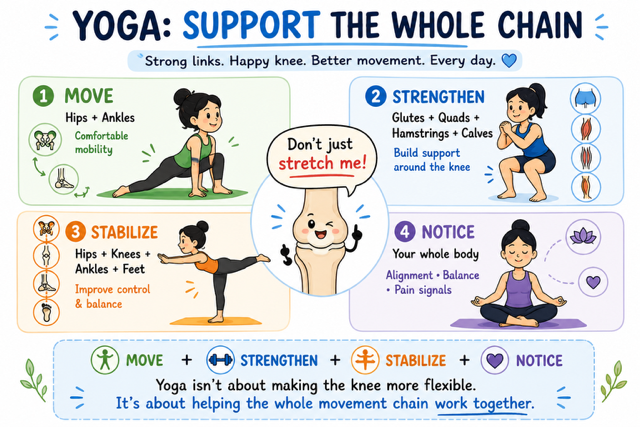
When knee discomfort appears, it's tempting to search for a list of “knee poses.”
But yoga can offer something broader. A thoughtful practice can work on the areas surrounding the joint while also developing coordination and awareness.
Instead of asking “How do I stretch my knee?”
Ask “What does the rest of my movement system need?”
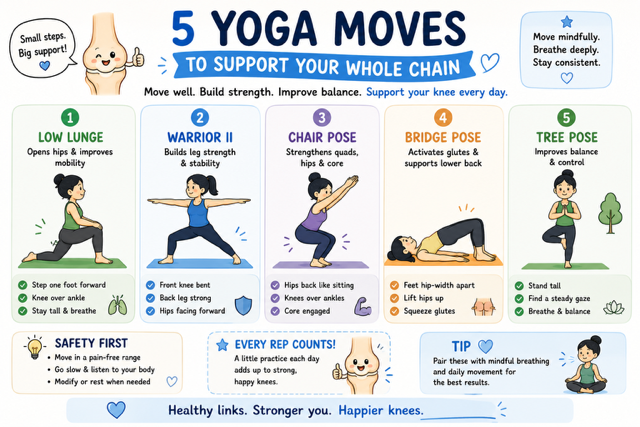
Move slowly enough to notice what your body tells you.
The Pose Should Adapt to You
Yoga often creates the myth that progress means going deeper. It doesn’t.
Bodies have different proportions, histories, strengths, limitations, and ranges of motion. Even your own body changes day to day.
If a lunge feels uncomfortable, shorten it.
If kneeling bothers you, pad the knee.
If Chair Pose feels better higher, stay higher.
If balance wobbles, use a wall.
Blocks, blankets, chairs, straps, walls - tools, not shortcuts.
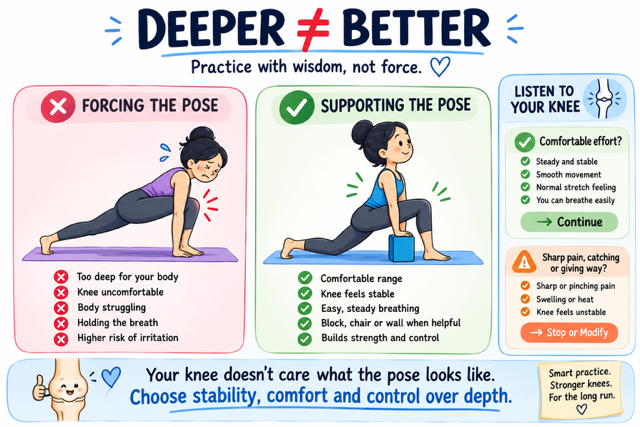
Depth is not progress. Comfort, control, and breath are progress.
Daily Life Matters More Than One Pose
Most knee load comes from everyday movement - not yoga class.
Walking, stairs, sitting, standing, carrying, bending.
Small habits shape how the chain behaves.
Ayurveda adds one more layer: the way you care for yourself between movements — your nourishment, rest, warmth, and daily rhythm — shapes how your joints feel over time.
Ayurveda: Care Between Practices
Ayurveda reminds us that joint comfort is influenced by daily rhythm:
Regular movement
Nourishing meals
Rest + sleep
Warmth in cooler seasons
Gentle oil massage (abhyanga) for comfort - not treatment
What you do between practices matters.
When Yoga Isn't Enough
Not every painful knee needs another pose.
Seek professional evaluation for:
Significant swelling - inability to bear weight - locking - repeated giving way - a major injury - severe pain - symptoms that persist or worsen
If you have arthritis, a known knee injury, previous surgery, or are already receiving treatment, your healthcare professional or physical therapist can help determine which movements and ranges are appropriate for you.
Yoga can complement care - not replace it.
Look Beyond the Knee
Knee pain draws attention to the knee. Yoga invites you to widen that attention.
Look up. Look down.
Strengthen the chain.
Move with awareness.
Use support.
Choose comfort and control over depth.