
Fungal infections of the skin are among the most common dermatological problems, particularly in tropical countries.
The warm and humid climate, excessive sweating and prolonged occlusion of skin folds create an ideal environment for fungal growth. One of the most frequent presentations is fungal infection of the groin, commonly known as tinea cruris or “jock itch” in modern terms.
Although anyone can develop this condition, it is particularly common among men, especially those who sweat excessively, are physically active, wear tight clothing for prolonged periods or have associated fungal infections.
From an Ayurvedic perspective, the clinical picture of this condition can be correlated closely with Dadru Kuṣṭha, a condition described under Kuṣṭha roga. Classical descriptions of Dadru include Kandu (intense itching), Rāga (redness around the lesion), Udgata Maṇḍala (circular lesions with raised margins) and Pidaka (papular eruptions or boils).
What is fungal dermatitis?
Fungal dermatitis refers to inflammation of the skin caused by fungal organisms. Here, the infection is generally caused by dermatophytes.
Unlike the popular term “ringworm,” there is no worm involvement. The name comes from the characteristic ring-like appearance that may develop as the fungus spreads outward through the superficial keratinized layers of the skin.
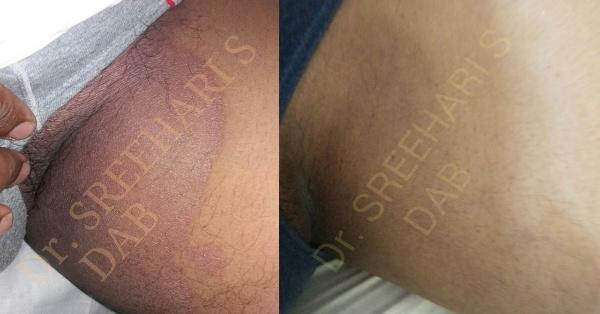
They typically affect the inguinal folds, upper inner thighs and surrounding groin region. It may present with an itchy, scaly, reddish-brown plaque with a more active, raised border. In darker skin tones, the colour may appear brown, grey or hyperpigmented rather than bright red.
Why is the groin particularly vulnerable?
The groin provides almost everything that dermatophytes need:
- Warmth
- Moisture
- Occlusion
- Friction between skin surfaces
- Poor ventilation
- Keratin-rich superficial skin
- Prolonged use of tight dark or synthetic clothing
Men who exercise regularly may be particularly susceptible because of increased sweating and prolonged periods in damp clothing.
Obesity, diabetes, excessive sweating, compromised immunity and poor hygiene can further increase susceptibility.
The Ayurvedic perspective:
Dadru Kuṣṭha - A circular, elevated, itchy lesion.
The important features include:
सकण्डूरागपिडकं दद्रुमण्डलमुद्गतम् ।
Kandu – severe itching
Rāga – redness/discoloration
Udgata Maṇḍala – elevated circular patches
Pidaka – eruptions or papules
Dadru is generally considered Pitta-Kapha predominant.
The pathogenesis can be understood through Doṣha dushti (involving Pitta and Kapha) with involvement of Twak (skin).
Factors such as excessive sweating, improper diet, incompatible food combinations, poor hygiene and environmental conditions are considered relevant in the development or aggravation of skin disorders.
Samprapti: How can it be understood?
A simplified Ayurvedic interpretation may be represented as:
Nidāna Sevana → Pitta-Kapha Prakopa → Twak involvement → manifestation of Kandu, Rāga, Maṇḍala and Pidaka.
Why does it keep coming back?
Recurrence is one of the biggest problems with groin fungal infections.
A patient may experience temporary relief after treatment but develop the rash again because the underlying predisposing factors remain.
Common reasons include:
- Persistent sweating
- Wearing the same damp underwear or gym clothes for long periods
- Inadequate drying after bathing
- Reinfection from an untreated foot or nail infection
- Sharing towels or clothing
- Stopping anti-fungal treatment too early
- Using inappropriate steroid-containing combination creams without consultation.
Management
From an Ayurvedic perspective, management of Dadru traditionally involves a combination of:
1. Nidāna Parivarjana
Removing aggravating factors is a MUST.
This includes:
- Keeping the groin clean.
- Avoiding prolonged sweating
- Wearing loose, breathable clothing
- Changing underwear after excessive sweating
- Maintaining appropriate personal hygiene
- Avoiding sharing towels and clothing
- Treating associated fungal infections elsewhere on the body
This principle is particularly relevant because the warm, humid environment itself promotes fungal persistence.
2. Chikitsā
Ayurvedic literature describes various internal and external approaches for Dadru with various Pitta-Kapha hara drugs.
Internal medicines containing NIMBA (NEEM) along with certain Lepa preparations have been found really effective because of their “Krimihara” property.
However, the groin is a sensitive and relatively occluded area. Irritating herbal pastes, oils or untested home remedies can cause contact dermatitis and worsen the condition. Hence, should be used under professional guidance. Treat the athlete's foot at the same time, and put socks on before underwear. This keeps the fungus from transferring from the feet to the groin, which ties directly to recurrence.
3. Prevention is as important as treatment
For men who frequently experience groin fungal infections, simple preventive measures can make a significant difference.
"Keep it dry. Keep it clean. Keep it ventilated."
After bathing or exercising, the groin should be dried carefully. Sweat-soaked gym clothes should not be worn for prolonged periods. Breathable underwear and loose clothing can reduce moisture and friction. Towels, underwear and sports clothing should not be shared.
4. When to see a doctor
- When you see discoloration around the groin.
- when you feel continuous itching for 2-3 days.
Conclusion
Fungal dermatitis of the groin is more than a simple problem of itching. It is a fungal infection favoured by heat, moisture, friction and occlusion, making the male groin particularly susceptible.
The Ayurvedic emphasis on Nidāna Parivarjana, Doṣha assessment, appropriate external therapy and individualized management.
Ultimately, prevention of moisture, early diagnosis and adequate treatment remain the keys to breaking the cycle of recurrent nature of the condition.
आरोग्यं परमं भाग्यं, स्वास्थ्यं सर्वार्थसाधनम्।
Health is the greatest fortune; health is the means to all goals